15 Screen-Free Family Activities at Home Using What You Have
For an easy screen-free afternoon, choose one shared activity with materials already at home: drawing, a familiar game, a picnic or a small cooking task. These 15 ideas are options, not a schedule. Match the activity to the space and adult attention available, and leave room for people to join briefly or take a break.
On this page
Choose an idea for your table
1. Draw a picture together
Choose a loose theme such as an imaginary street, then take turns adding one thing. One person can tell the story while another draws. Keep it collaborative and let everyone choose their own level of detail; you do not need a finished masterpiece or craft supplies beyond paper and pencils.
2. Make an indoor picnic
Serve an ordinary lunch on a blanket or at a differently arranged table. Keep food suited to the household's needs and allergies, and choose a surface that is easy to clear. The setting is the activity, so there is no need to bake special treats or buy decorations.
3. Play a familiar game
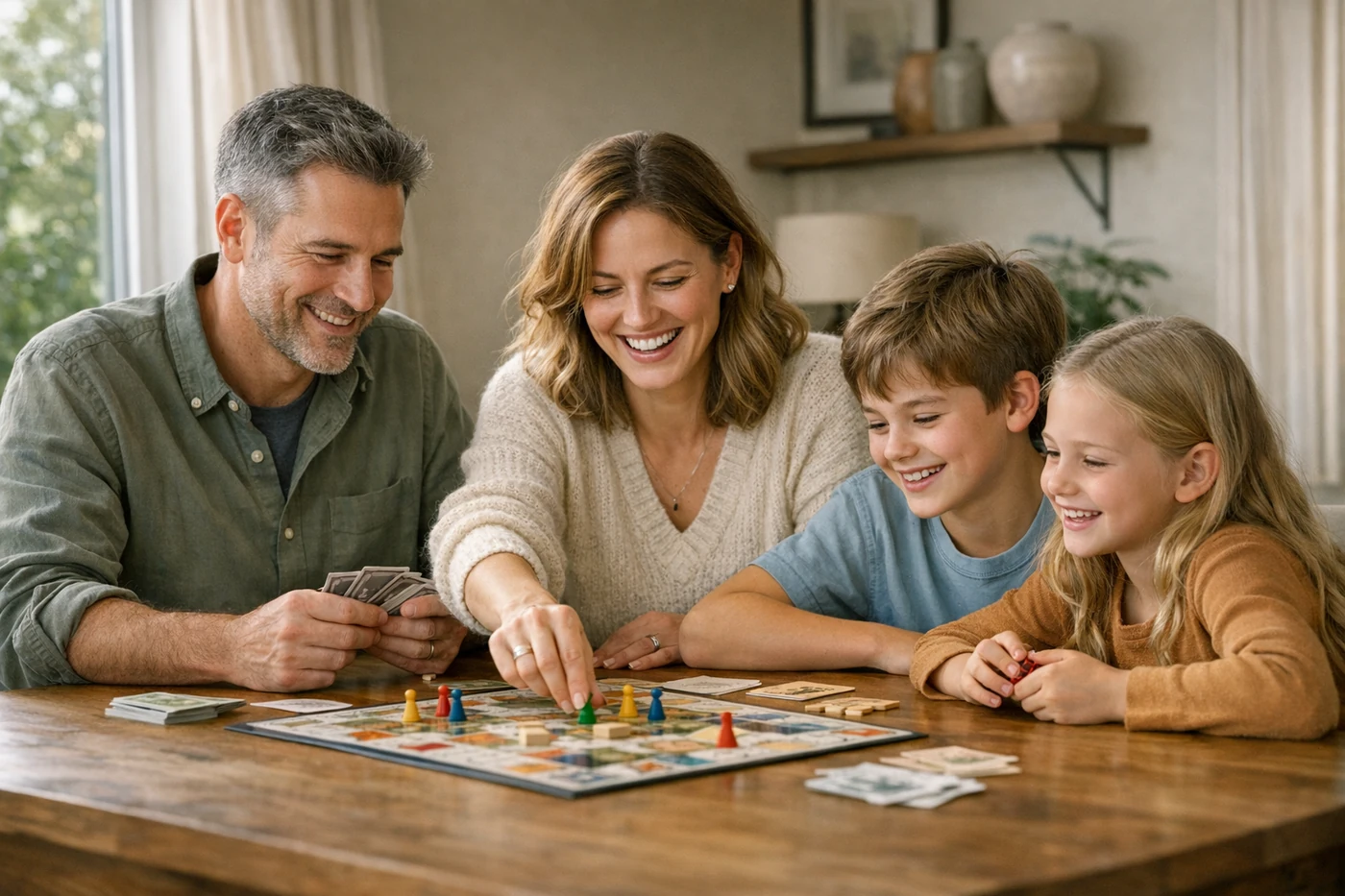
Pick a short card, matching or board game already understood by someone in the group. Show a demonstration round and agree when to finish. Pair players where needed without letting adults make every decision. Our game-night ideas offer more no-purchase formats.
4. Read aloud in turns
Choose a short chapter, picture book or poem that suits the listeners. Readers can alternate, or one adult can read while others draw or listen. Pause if someone wants to talk about the story, but do not turn it into a comprehension test. Audiovisual equipment is not needed.
5. Create a colour or shape hunt
Ask the group to spot objects of one colour or a few simple shapes around a safe part of the home. Looking is enough; avoid moving breakable items or searching cupboards that contain hazardous products. Younger children can point while older ones draw a small list.
6. Prepare one simple recipe together
Choose a familiar dish and give each person a clear task that matches their ability, such as measuring, mixing or washing appropriate produce. Adults handle heat, sharp tools and food-safety decisions. Browse the family dinner ideas for a practical meal rather than making a separate craft-like food project.
7. Make a memory tray
Collect a few suitable large objects, look at them together, then cover them and recall the set. Keep it cooperative and reduce the number of items if needed. Avoid small pieces where they would be unsafe. A few enjoyable rounds are enough; there is no need to rank anyone's memory.
8. Build an imaginary neighbourhood
Draw roads and buildings on scrap paper or arrange suitable blocks you own. Decide together where the park, homes and shops belong. Leave space for a different person's ideas rather than aiming for a perfect model. Use a tray or one clear area so cleanup stays manageable.
9. Tell a story one sentence at a time
Start with a simple scene and let each willing person add the next sentence. Allow a pass, an illustration or a short phrase instead. End the story after a few turns or when someone finds a good ending. Silly plots are welcome; nobody needs to perform a polished story.
10. Look through a few family photographs
Use printed photographs or an album if you have one available, so the activity can stay screen-free. Invite people to describe what they remember without correcting every detail. Skip images or stories that someone finds uncomfortable. A small selection is easier than trying to organise the entire collection.
11. Check a kitchen herb or plant together
If you have a plant, look for new growth, check the care instructions and water only if appropriate. Do not taste unidentified plants or assume every indoor plant is edible. Children can draw a leaf instead of handling the plant. For an edible starting point, see herbs to grow for cooking.
12. Make a shared recommendation list
On paper, collect favourite books, meals, games or places each person would like to revisit. Let everyone suggest a different category and avoid treating the list as a promise to buy or book anything. Choose one idea that is realistic to repeat at home.
13. Put on a small puppet or toy story
Use suitable toys or simple paper characters you already have. Make a brief scene and let people choose between acting, narrating or watching. Keep performance optional and the materials age-appropriate. One amusing scene is a complete activity, even without costumes or a stage.
14. Write or draw a note for someone
Choose a friend or relative and make a simple card, drawing or message on paper. An adult can help with writing or any later delivery. Do not include private information or make sending it a condition of participation. Appreciating the person together is enough for the activity.
15. Invent a tiny family tradition
Pick something repeatable, such as a shared Sunday question, a favourite breakfast or a short game after clearing the table. Keep the effort low and allow the routine to change. Our small family traditions guide helps make it sustainable rather than another obligation.
Choose by energy, not by how impressive it looks
Offer two realistic choices instead of an open-ended demand for family fun. If an adult is busy, choose an activity that needs only the supervision you can genuinely provide. Smaller groups count as family time too. Agree on a finish and a quick cleanup, and stop if the activity no longer suits the people doing it.
At a glance
| Available time | Try | Preparation |
|---|---|---|
| A short gap | Draw one picture together in turns | Paper and pencils |
| An hour together | A familiar game or simple cooking task | Choose appropriate tools and supervision |
| A relaxed afternoon | Indoor or backyard picnic | A simple meal and comfortable seating |
| A quiet day | Read aloud or share favorite music | Let each person choose a turn |
Choose the constraint before the activity
Decide how much time, space and adult attention are actually available. Avoid a project that needs constant supervision when an adult is also trying to work or care for another child. Offer two manageable choices rather than asking an unlimited question. A useful activity can include different levels of participation: one person draws while another tells the story, or someone watches before joining.
Make ordinary materials feel different
Draw a map of an imaginary neighborhood, build a small paper model or create a scavenger list of colors and shapes already in the room. Use age-appropriate materials and keep small or sharp items away from children for whom they are unsuitable. A blanket picnic at the kitchen table or on the living-room floor changes the setting without changing the menu. You do not need to recreate a photographed party.
Include a practical shared task when people want it
Cooking can be an activity if the recipe and supervision fit the participants. Choose a familiar dish and assign manageable jobs such as mixing, measuring or washing suitable produce. Adults remain responsible for heat, sharp tools, hygiene and checking food is cooked safely. Gardening can be similarly modest: inspect a known edible herb, water an appropriate pot or draw the plant rather than starting an entire garden.
End before the activity becomes the whole day’s work
Agree on a stopping point and a simple way to put things away. Keep unfinished work on a tray if you want to return to it. If the first choice does not land, switch or stop rather than insisting it was supposed to be fun. Leave room for individual time afterward. A small, repeatable shared moment is often easier to maintain than a weekend packed with planned entertainment.
A practical starting checklist
- Pick a realistic amount of shared time.
- Offer two activities using materials already available.
- Set up suitable supervision and a clear stopping point.
- Finish with a short shared cleanup.
Common question
Does family time have to involve everyone at once?
No. Smaller combinations can be easier and more enjoyable. Rotate opportunities and avoid making one activity the only acceptable way to spend time together.
An original practical guide from Get Back to the Table. Updated November 1, 2026.