Everyday dining table centerpiece ideas that do not get in the way
The best everyday centerpiece is low, stable and easy to move. Use one small grouping that leaves space for plates and serving dishes, then change a single element when you want the table to feel different.
On this page
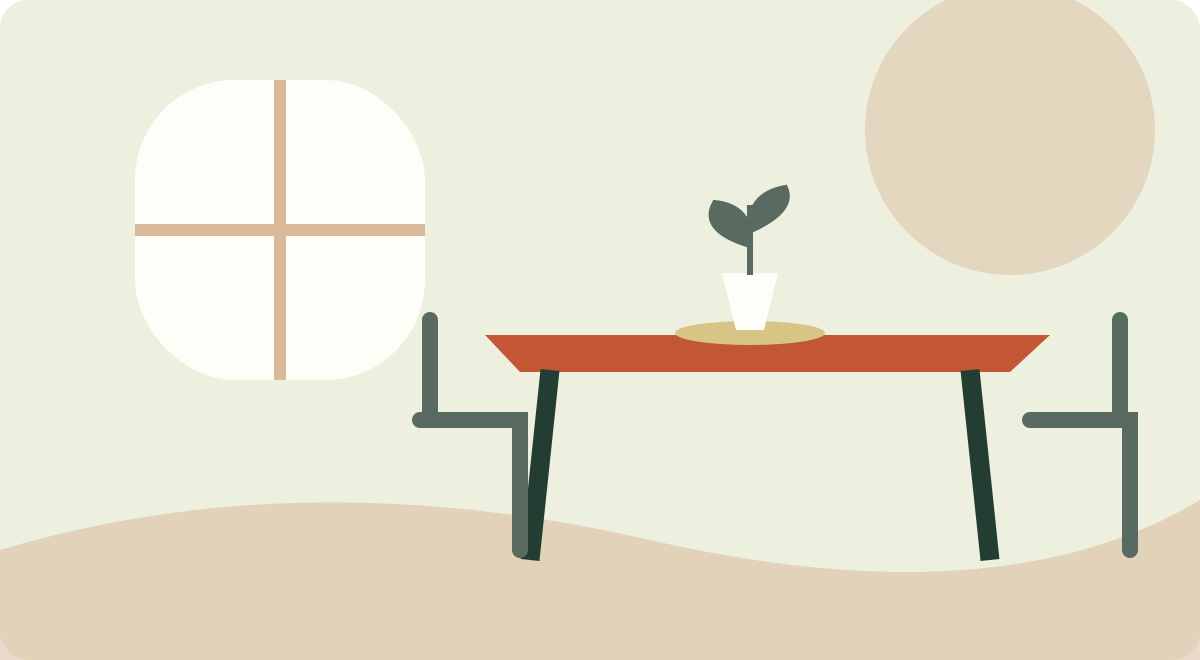
At a glance
| Idea | Why it works | Watch for |
|---|---|---|
| One shallow bowl | Useful and easy to lift away | Fruit must be checked and eaten |
| Small vase | A little seasonal color | Spills, pollen and toxic plants around pets |
| Washable runner | Softens the table without more objects | Dangling edges around young children |
| Low tray | Keeps a few objects together | A tray should not occupy the whole eating area |
Start with the table set for a meal
Put out the number of plates, glasses and serving bowls you actually use. The space left in the middle is your decorating area, not the starting point. A centerpiece that looks good on an empty table may become a nuisance at dinner. Check that people can see one another without leaning around a tall vase. On a very small table, the centerpiece can simply move to a sideboard while you eat.
Use ordinary objects with a purpose
A ceramic bowl for fruit, a small plant with a protective saucer or a jug you already own can be enough. Choose a vessel with a stable base and protect wood from moisture. Keep decorative materials separate from food-contact surfaces. If you use cut flowers, consider allergies and identify plants before bringing them into a home with pets or children; attractive does not mean harmless.
Build a restrained seasonal change
Keep the same bowl or vase and change what goes inside it. A branch, a few garden stems or a different cloth can signal the season without a shopping trip. Avoid scattering loose glitter, tiny ornaments or crumb-catching dried material across the eating surface. If you enjoy candles, flameless options simplify everyday use. Keep any real flame well away from fabric and never leave it unattended.
Give the arrangement a reset routine
Lift the centerpiece when you wipe the table and check underneath for moisture or marks. Remove tired flowers and overripe fruit promptly. Store only a few alternate pieces together so changing the look does not create another large collection. The point is a welcoming place to sit, not a display that makes people nervous about using the table.
A practical starting checklist
- Set the table before deciding how much decoration fits.
- Choose one vessel already in the house.
- Keep the arrangement below seated sightlines.
- Pick a nearby landing spot for it during shared meals.
Common question
How many objects should be in a centerpiece?
There is no required number. One useful bowl or vase often works better than a styled group that leaves no room for dinner.
An original practical guide from Get Back to the Table. Published October 30, 2026.