How to freeze soup: cooling, containers and reheating
Yes, you can freeze most homemade soups. Divide the cooked soup into small, shallow containers, refrigerate promptly, then pack the chilled soup into freezer-safe portions with room to expand. For the best texture, freeze the soup base without pasta, cream or delicate toppings, and add those when serving.
On this page
- Which soups freeze well?
- Cool soup safely: do not wait for the whole pot
- Choose containers that fit your freezer and your next meal
- Label for the meal you will actually make
- Thaw and reheat without cold spots
- Fix texture problems on the next batch
- Common soup-freezing questions
- Make one freezer soup meal work this week
A good freezer soup is easy to cool, easy to identify and the right size for one meal. This guide covers what to freeze, how to choose containers, and how to turn a frozen portion back into dinner without a pot of mushy noodles. For planning an entire cooking session, use our beginner’s batch-cooking plan.
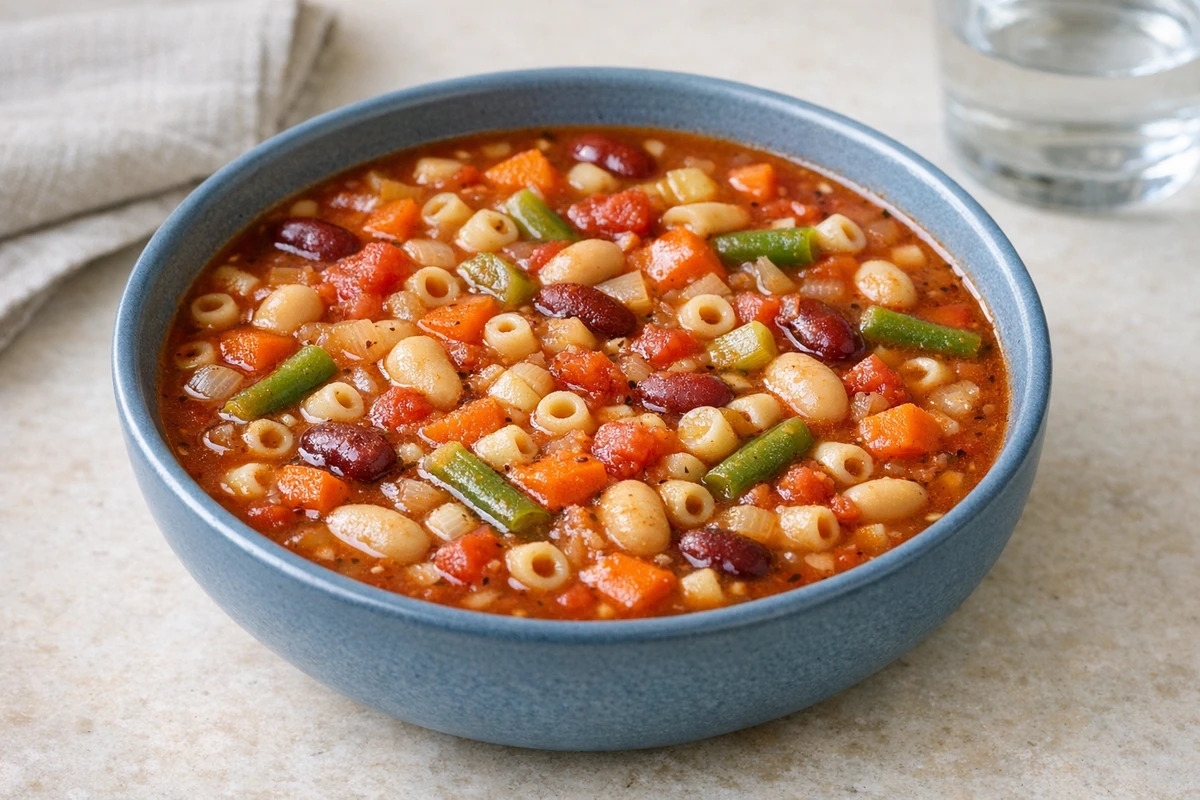
Which soups freeze well?
| Soup | What to freeze | What to finish fresh |
|---|---|---|
| Bean, lentil or tomato soup | The cooked soup or base | Herbs, lemon and crunchy toppings |
| Vegetable noodle soup | Broth and vegetables, without noodles if possible | Cooked pasta added to each bowl |
| Chicken and rice soup | The safely cooked chicken-and-broth base | Freshly cooked rice, or safely handled rice stored separately |
| Creamy soup or chowder | Preferably the base before dairy is added | Cream, milk or a finishing swirl |
| Chunky potato soup | A small test portion first | Any dairy finish; expect softer or grainier potatoes |
Freezing changes texture, not just temperature. Pasta continues to absorb liquid, potatoes can become mealy, and dairy emulsions may separate. None of those changes means every recipe will fail: it means you should test a single portion before making a large batch. A blended vegetable base is often more forgiving than a soup whose appeal depends on crisp vegetables or distinct potato cubes.
Start with everyday minestrone, keeping its pasta separate, or browse our soup recipes for another familiar flavor. Season moderately before freezing and taste again after reheating; finishing herbs and a little acidity can make a stored soup feel freshly cooked.
Cool soup safely: do not wait for the whole pot
Do not leave a large stockpot on the counter until it reaches room temperature. The CDC advises refrigerating perishable food within two hours, or within one hour when exposed to temperatures above 90°F/32°C. That is a maximum limit, not a target waiting time. Freezing later does not rescue soup that has been left out too long.
- Set out clean, shallow containers before the soup is finished. Check that the refrigerator has room for them.
- Divide the cooked soup into small portions. A deep, tightly packed container cools more slowly than several shallow ones.
- Refrigerate promptly. The CDC specifically notes that small portions of hot food can go into the refrigerator to chill faster. Keep the refrigerator at 40°F/4°C or below.
- Once chilled, transfer if necessary into the freezer packaging you have chosen, leaving expansion room. Seal, label and freeze promptly.
If the batch is too large for your available cooling space, make a smaller batch next time. Do not solve a space problem by leaving half the soup out for hours. Keep raw ingredients and their utensils away from the cooling cooked food. When a soup contains rice, follow our rice-specific cooling and freezing guidance rather than treating rice as an afterthought.
Choose containers that fit your freezer and your next meal
Use rigid containers or bags explicitly intended for freezer storage. A container that holds soup in the refrigerator is not automatically suitable for freezing. Check the manufacturer’s fill line and instructions: soup expands as it freezes, and an overfilled container can split or leak. The National Center for Home Food Preservation provides a headspace chart; the amount depends on the food, container size and opening.
For glass, use only containers the manufacturer identifies as freezer-safe, and follow its shape, fill and temperature-change guidance. Do not assume a reused sauce jar is safe to freeze. Avoid sudden temperature changes, including pouring hot soup into cold glass or putting frozen glass straight into hot water.
- Individual tubs: useful for lunches and mixed schedules. Choose the portion that fits your usual bowl, not the biggest tub in the cupboard.
- Family containers: useful when everyone eats together, but remember that a thick block takes longer to thaw.
- Freezer bags: good for saving space. Put chilled soup in a bag suitable for liquids, leave expansion space, seal carefully and freeze flat on a tray. Use a tray or bowl underneath when thawing in case of leaks.
Leave room around newly added portions for cold air to circulate; do not overload the freezer with a huge warm batch. Keep it at 0°F/−18°C or below. Once portions are frozen solid, rearrange them into a neat stack if your packaging allows it.
Label for the meal you will actually make
Write the soup name, freezing date, portion count and finishing instructions before the container becomes frosty. Add relevant ingredients when household members need to check allergens. “Vegetable soup — two lunch portions — add pasta after reheating” is much more useful than “soup.” If you make several versions, distinguish them clearly rather than relying on their color through a frozen lid.
As a household rotation habit, plan to eat your batch over the next couple of months rather than storing it indefinitely. This is a practical quality goal, not a food-safety expiry date or a universal guarantee. Quality depends on the recipe, packaging and freezer conditions. Food kept continuously frozen at 0°F/−18°C remains safe, but only if it was safe when frozen; freezing does not undo poor handling. See the NCHFP explanation of frozen-food storage.
Thaw and reheat without cold spots
The simplest routine is to move one portion to the refrigerator, on a tray, ahead of the meal. Large blocks need longer than shallow portions, so avoid promising yourself a fixed thawing time. Never thaw soup on the counter overnight. If using a microwave to defrost, continue straight into reheating rather than holding the partly warmed soup for later.
Transfer soup to suitable cookware and heat, stirring thoroughly so the center warms along with the edges. Reheat leftovers to 165°F/74°C, checking with a food thermometer in more than one place. For microwave reheating, use a microwave-safe container, cover as directed, stir and allow the recommended standing time before checking. A hot rim does not prove the middle is ready. Do not use packaging in a microwave unless it is labeled suitable.
Add separately cooked pasta or rice, dairy and fresh toppings according to the recipe, and ensure the finished soup is thoroughly heated. If it is too thick, loosen it with a little water or stock while reheating. Warm only the portions you intend to eat; individual packs make this much easier than repeatedly warming a large batch.
Fix texture problems on the next batch
| What happened? | Why it can happen | Next time |
|---|---|---|
| Pasta is swollen and soft | It absorbed broth during storage and reheating | Freeze the base and cook pasta separately |
| Creamy soup looks split | The dairy mixture separated | Freeze before the dairy finish; stir gently when reheating |
| Potatoes feel grainy | Freezing altered their texture | Test the recipe in a small portion or choose a blended base |
| Soup tastes flat | Seasoning and aroma changed in storage | Taste after reheating, then finish with suitable herbs or lemon |
| Container leaked | Unsuitable packaging, a poor seal or too little expansion room | Use freezer-rated packaging and follow its fill instructions |
Common soup-freezing questions
Can I freeze soup that already contains pasta?
Yes, if the soup was handled safely, but expect softer pasta and a thicker soup after thawing. Freeze a small portion first if texture matters. For a fresh batch, reserve the base before adding pasta and cook only the pasta you need when serving.
Can I freeze creamy soup?
Often, but the texture is recipe-dependent. Dairy can separate, so freezing the base before adding cream or milk is usually the more reliable option. Test one portion of a finished creamy soup rather than assuming a whole batch will reheat smoothly.
Can freezing make old soup safe again?
No. Freeze soup while it is still safe, not as a way to rescue a batch with uncertain handling. If it has been left out beyond the safe time limit, discard it; smelling or tasting it is not a reliable safety test.
Make one freezer soup meal work this week
- Choose a familiar soup and decide which ingredients to add fresh.
- Prepare shallow cooling containers and freezer-rated packaging before cooking.
- Label each chilled portion with a date and clear finishing instructions.
- Put one freezer meal into your weekly plan, so the portions get used.
A spoonful of properly stored herbs makes a useful finish. Our fresh-herb storage guide explains what to keep fresh and what to freeze for cooked dishes. Return to the freezer and food-storage hub for other foods.
Food-safety and preservation references
Published November 1, 2026 · Get Back to the Table editorial team