Batch cooking freezer meals: a beginner’s plan
For your first batch-cooking session, make two meals you already enjoy and freeze a few extra portions. You do not need a freezer full of unfamiliar recipes or an entire day in the kitchen.
On this page
Make two freezer dinners before the holiday rush
- Check your space first. Choose containers that fit the freezer and leave room around new portions while they freeze.
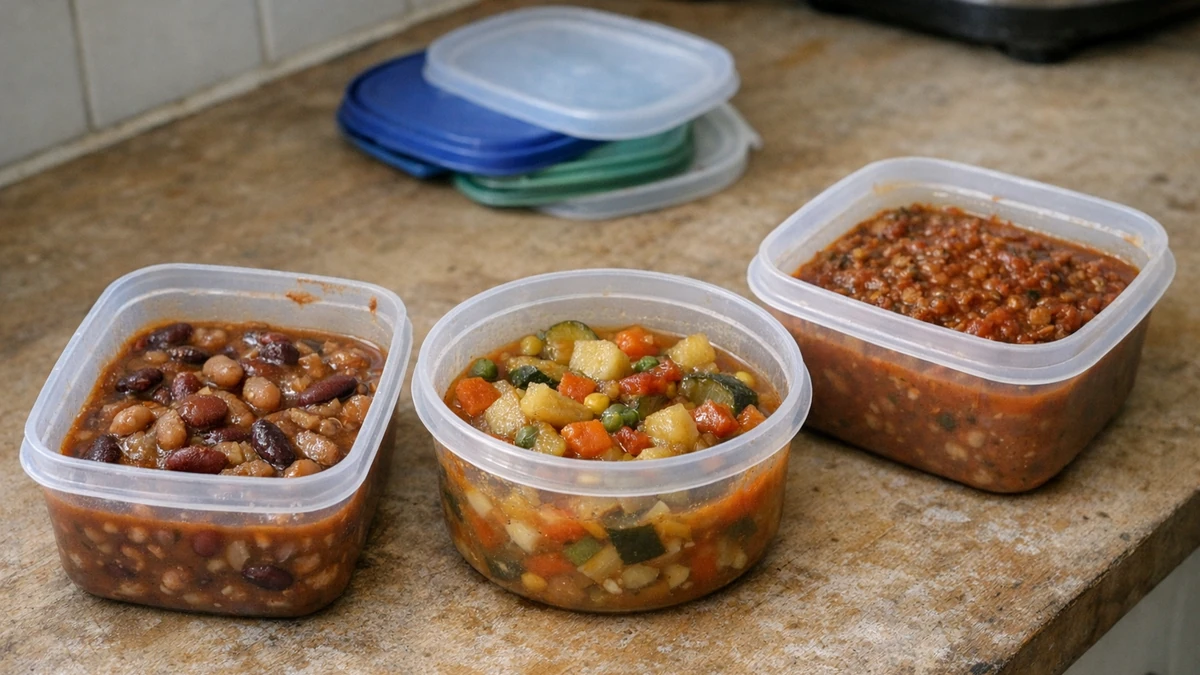
- Pick two familiar meals. A bean stew and a lentil tomato sauce share useful ingredients without locking the whole week into one dinner.
- Count the portions you will actually use. Freeze a mixture of individual and family portions instead of one large block.
- Label the next action. Write the meal, portion count, freezing date and reheating instructions on each container. Keep a matching note in your meal plan.
Follow the safe cooling and reheating guidance below.
Pick meals that freeze well
Soups, bean stews, lentil sauces and many casseroles are good starting points. Crisp salads and delicate garnishes are better added fresh. Creamy sauces and cooked potatoes can change texture, so test a small portion before scaling up.
| Meal base | Freeze | Add when serving |
|---|---|---|
| Tomato and lentil sauce | Sauce in meal-sized containers | Freshly cooked pasta |
| Bean and vegetable stew | Cooked stew, cooled promptly | Bread or rice |
| Sausage and chickpea soup | Soup without delicate garnish | Herbs and toast |
| Roasted vegetable filling | Small portions | Wraps, yogurt and salad |
If one of your two meals is soup, use our soup cooling, container and reheating guide before scaling up. It explains why noodles and a creamy finish are often better added when you eat.
Plan the session before cooking
- Check freezer space and containers first. Make sure your freezer can handle the added food without overloading it.
- Choose two dishes sharing onions, carrots or tomatoes. Prepare ingredients together, keeping raw meat and ready-to-eat food separate.
- Cook in manageable quantities. Follow your recipe and use a thermometer where needed.
- Divide into shallow containers for prompt cooling. Refrigerate or freeze within two hours; use a one-hour limit in temperatures above 90°F/32°C. Rice needs particularly prompt cooling.
- Label every portion and record what went into the freezer.
A freezer inventory you can copy
| Dish | Frozen on | Portions | Plan to use |
|---|---|---|---|
| Lentil tomato sauce | Write date | 2 family portions | Next pasta night |
| Vegetable soup | Write date | 4 lunch portions | Lunches this month |
Thaw and reheat safely
Thaw in the refrigerator. A microwave can be used if you will heat and eat the food immediately. Do not leave meals on the counter overnight. Reheat leftovers to 165°F/74°C, checking several places in thick or microwaved food. Keep the freezer at 0°F/−18°C or below.
Consult FoodSafety.gov’s storage chart for food-specific guidance and the rice guide for rice-specific handling. Plan a freezer night with the weekly meal planner.
Cooking ahead for a gathering? Use the small-fridge Thanksgiving plan and storage-space worksheet before deciding how much to freeze.
Where to go next
 Kitchen guide
Cheap meal prep ideas: a practical mix-and-match plan
Budget-friendly meal prep using beans, eggs, potatoes and shared vegetables, with a shopping checklist and realistic waste-saving swaps.
 Kitchen guide
Vegetarian meal prep ideas for busy families
Five mix-and-match vegetarian meals and a manageable prep routine for the week.
Updated October 29, 2026 · Practical guidance