Meal prep salads that stay crisp: six practical combinations
For meal-prep salads, use a sturdy base, cool cooked ingredients before combining them, and keep dressing and crunchy toppings separate. Make enough chilled portions for the next few days rather than assuming every salad lasts all week.
On this page
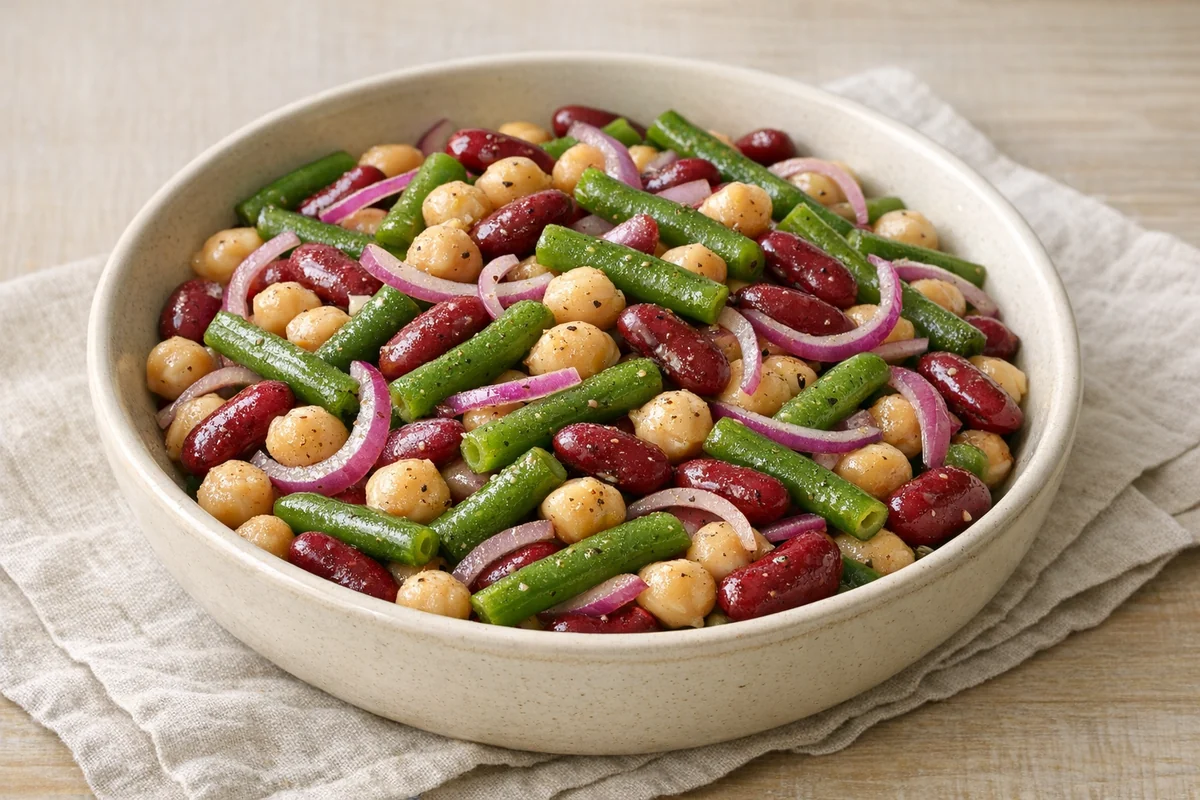
Build a salad around its weakest ingredient
| Combination | Good make-ahead components | Add close to serving |
|---|---|---|
| Chickpea and roast carrot | Chickpeas, cooked carrots and a separate lemon dressing | Dry leaves and herbs |
| Three-bean salad | Beans and the recipe’s dressing | Any delicate fresh garnish |
| Green bean and salmon | Properly cooked and chilled green beans and salmon | Dress shortly before serving; follow the fish storage window |
| Barley and greens | Cooked barley and sturdy vegetables | Tender leaves; serve warm as the recipe directs, or cool safely for a cold variation |
| Corn and bean bowl | Drained corn, beans, peppers and separate dressing | Avocado or crisp chips |
| Cabbage slaw | Shredded cabbage and other sturdy vegetables | Dressing if you prefer a crisp slaw |
Keep water out before you pack
Drain canned beans and corn thoroughly. Dry washed leaves using a clean salad spinner or towel. Cool cooked vegetables and grains promptly in shallow containers, then refrigerate; do not seal warm ingredients over leaves and expect them to remain crisp. Choose clean containers that fit the amount of food rather than compressing delicate leaves into an overfilled box.
For a jar salad, put dressing at the bottom, then sturdy vegetables and beans, with dry leaves near the top. The jar must still stay refrigerated and be transported cold. Layering helps texture; it does not preserve an unsafe lunch.
Turn a side salad into a satisfying lunch
Include a protein component such as beans, chickpeas, eggs, tofu or cooked fish, then add bread, potatoes or a grain if that suits your appetite. Check each recipe before making substitutions. Eggs, dairy, fish, wheat, nuts and dressings can introduce allergens, and a sauce may not be vegetarian even when the vegetables are.
Choose one dressing and two different bases to reduce shopping. Lemon and olive oil work with beans and cooked vegetables; yogurt-based dressing is another option when kept properly chilled. Pack any nuts, seeds or toasted bread in a separate dry compartment.
Use a two-session prep rhythm
Prepare two or three early-week lunches, then wash fresh leaves or assemble another small batch midweek. If you make extra soup or a freezer-friendly cooked grain, store it separately for another meal rather than freezing a complete lettuce salad. Avocado, cucumber and dressed leaves can soften or release water; add them later when texture matters.
Cool cooked food promptly in shallow containers and refrigerate within two hours, or one hour above 90°F/32°C. Keep the fridge at 40°F/4°C or below. Most cooked leftovers should be used within 3–4 days; freeze suitable portions earlier if you will not use them. Reheat cooked leftovers to 165°F/74°C. Keep cold lunches chilled until eating. Rice needs the more conservative handling explained in our rice-storage guide.
Choose the right next guide
For more plant-based combinations, see vegetarian meal prep ideas. For lower-cost ingredient overlap, use cheap meal prep ideas. Browse the salad recipe collection when you want full ingredient lists and methods.
Common questions
Should I add dressing before storing a meal-prep salad?
Keep dressing separate for leafy salads when crisp texture matters. Some sturdy bean salads are designed to marinate, so follow the recipe rather than applying one rule to every salad.
Can I freeze a complete salad?
Leafy salads, cucumber and creamy dressings often lose texture when frozen. Freeze only suitable cooked components separately, then assemble with fresh salad ingredients later.
Where to go next
Vegetarian meal prep ideas for busy families
Five mix-and-match vegetarian meals and a manageable prep routine for the week.
 Kitchen guide
Cheap meal prep ideas: a practical mix-and-match plan
Budget-friendly meal prep using beans, eggs, potatoes and shared vegetables, with a shopping checklist and realistic waste-saving swaps.
Updated October 29, 2026 · Independent practical guidance